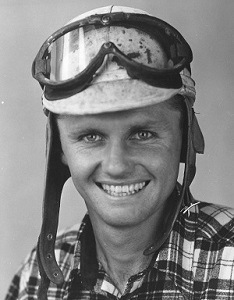
Robert Charles Sweikert was born on May 20, 1926, in Los Angeles, California, the son of Ray and Grace Lake Schweikart, who had migrated from Pittsburgh, Pennsylvania. His parents divorced before Bob was born, and Grace later married Frank Moloney, an engineer for the Los Angeles Transit System. In 1941, the family moved north to San Francisco and then to Hayward, a farming community on the east side of the Bay.
In 1942, the musically inclined teenager enrolled at Hayward High School, where he met Delores Schoonover, or "Doll," as he called her. Soon after graduating, in July 1944, Sweikert joined the Air Force and was stationed in Colorado. Following a knee injury, he was discharged in September 1945 and returned to California, where he married and had a daughter named Carol. Delores ("Dorie"), meanwhile, had married a man named Norman Chute and settled in Hayward, where their daughter Lynette was born in 1946. The following year, Dorie and Norman left Hayward and moved to Redding, where their son Stephen was born in 1949.
In 1947, Sweikert was working as a car salesman and mechanic in Hayward when he began racing his home-built roadster against the likes of Bob Veith, Ed Elisian, and others at tracks such as Lodi, Fresno, and Oakland. He finished fifth in Northern California Roadster Racing Association (NCRRA) points, and the following year was declared NCRRA champion with more than twenty feature wins to his credit. The tall, blond-haired, blue-eyed gentleman also won the 1948–49 Bay Cities Racing Association (BCRA) indoor midget championship while competing at the Oakland Exhibition Building.
In 1950, he passed his rookie test at Indianapolis, prompting the following testimonial from Gordon Betz, AAA California Zone Supervisor: "He's the best prospect to come out of California since Freddie Agabashian." Although he failed to qualify for the big race, he did land a part in To Please a Lady, which was being filmed at the time. The Carter Special Wetteroth Offenhauser he attempted to qualify was the same car that Floyd Davis and Mauri Rose drove to victory in the 1941 Indianapolis 500. Bob Sweikert ended 1950 in seventh place in the AAA Pacific Coast sprint car standings, behind Andy Linden, Cal Niday, Dempsey Wilson, Troy Ruttman, Jack McGrath, and "Jiggler Joe" Gemsa.
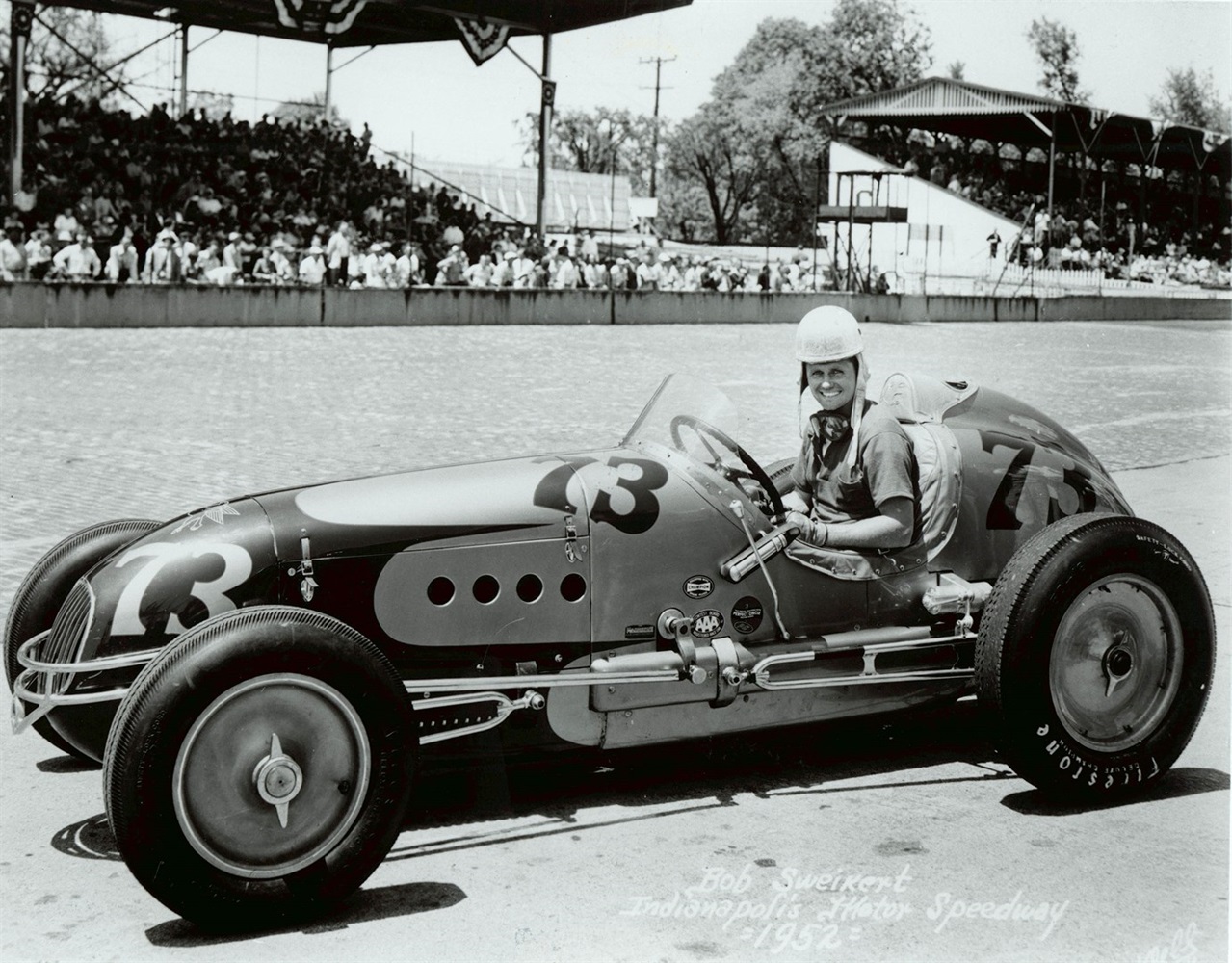
The following year, he broke his wrist in a midget accident on the West Coast and again missed the Indianapolis 500 starting field. He had initially qualified the Milt Marion Kurtis Kraft but was bumped from the field. During 1951 and 1952, as both of their marriages were failing, Bob and Dorie remained friends. In 1952, Bob moved his family to Indianapolis, where he qualified for the 500-mile classic aboard the Lee Elkins-owned, McNamara Special and ran for 77 laps before a broken differential ended his day in 26th.
On January 10, 1953, Bob and Dorie were married in Las Vegas but returned to Indianapolis shortly thereafter. Nine months later, Johnene—named in honor of fellow driver Johnny Boyd and car owner John T. Stanko—was born.
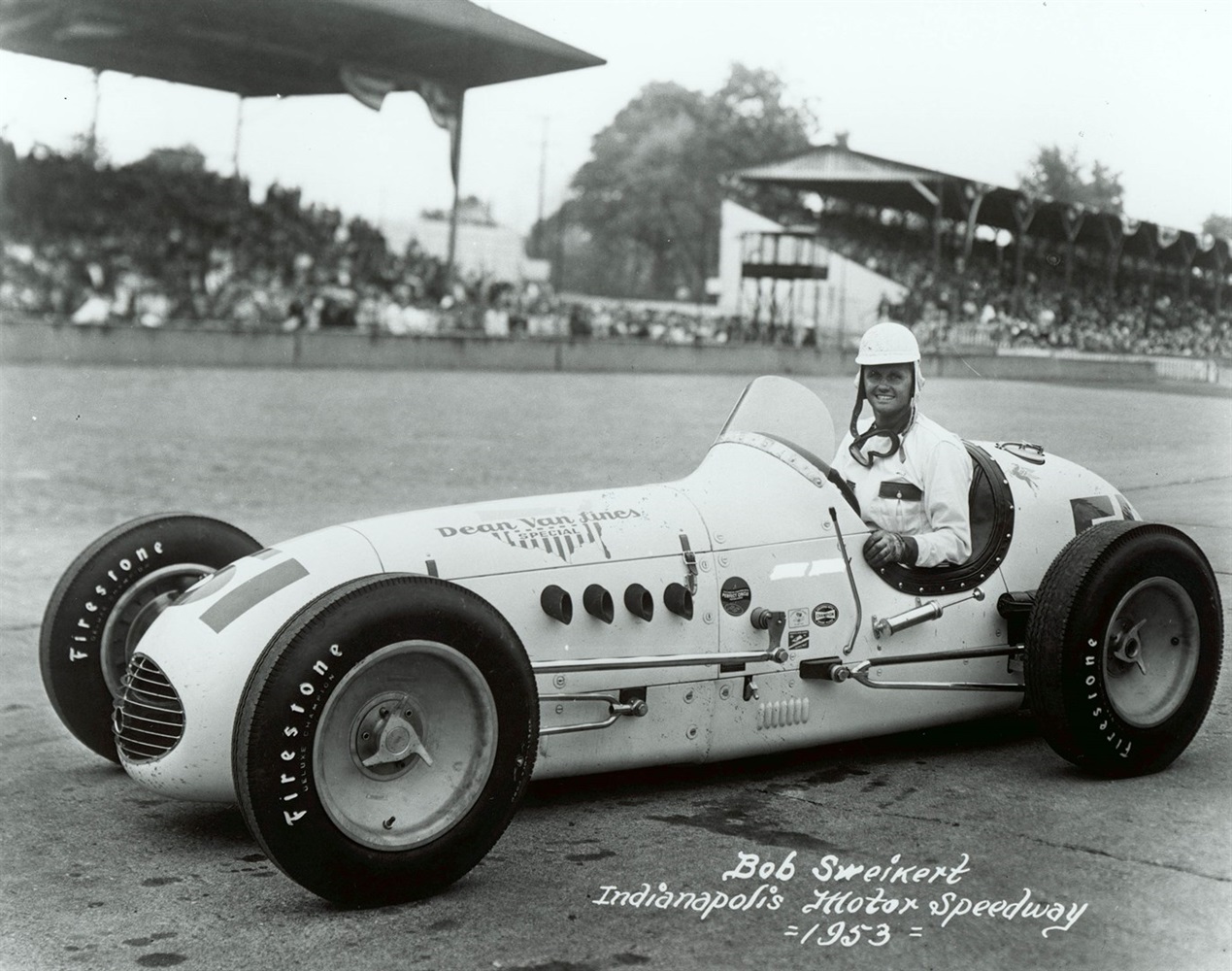
In May, Sweikert started his second Indianapolis 500, qualifying 29th and finishing 20th in the Dean Van Lines Special dirt car. He later drove the same car to victory in the Hoosier Hundred at the Indiana State Fairgrounds, earning his first AAA Championship win. He finished 15th in the final AAA Championship standings for the 1953 season.
For the start of the 1953 AAA Midwest Sprint Car season, Sweikert competed in the Howard and John Iddings-owned Henry Meyer/Offenhauser sprint car, battling the likes of Pat O'Connor, Mike Nazaruk, and Larry Crockett. When it came to racing on dirt, Sweikert usually finished ahead of his friendly rival O'Connor, unless the surface hardened and became more like asphalt.
With the season more than half over, Bob set a one-lap world record at Winchester that stood for nine years. The season finale at Salem came down to a showdown between the two rivals, with O'Connor claiming both the victory and the AAA Midwest Sprint Car championship. Bob, however, had won twice at Salem, on July 4 and August 2. He also won at Cedar Rapids, Iowa, on August 23 and at St. Paul on August 29, earning runner-up in the final 1953 AAA Midwest Sprint Car Championship standings.
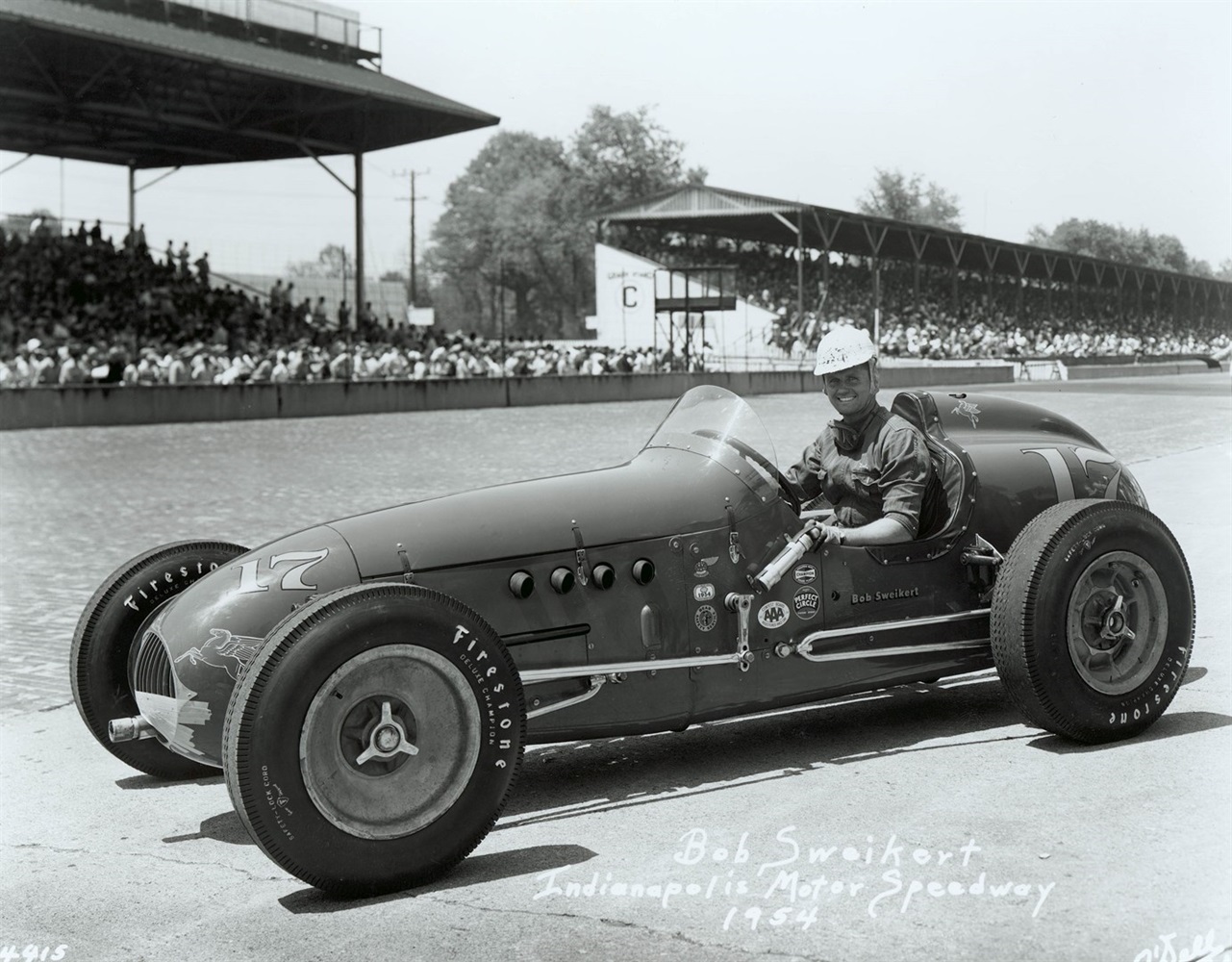
In May 1954, Sweikert drove the #17 Lutes Truck Parts Special to a 14th-place finish in the Indianapolis 500. On September 11, 1954, Sweikert became the first driver ever to average 90 mph in a 100-mile race, with his win at the Eastern Speed Dome in Syracuse. He finished sixth in the final AAA Championship Car standings for the 1954 season.
During the 1954 sprint car season, Sweikert drove one of Lee Elkins' three cars alongside LeRoy Warriner and Mike Nazaruk, while O'Connor drove for Hank Lammers. Sweikert finished fifth in the 1954 AAA Midwest Sprint Car standings, behind champion O'Connor. His victories that season came at Salem on June 27 and August 8. He also won at Springfield, Massachusetts, on September 23–24 in AAA Eastern Sprint Car competition.
That winter, while sitting around Wally Meskowski's Indianapolis shop - which Sweikert used as the headquarters for his sprint car operation - Bob analyzed his 1954 problems: "It was my stupid mechanic. Just too many mechanical problems!"
Bob wasn't afraid to poke fun at himself, often referring to either the engineer in him as a "stupid mechanic" or the driver in him as a "squirrel."
In addition to running his own sprint car program in 1955, Sweikert added a second sprinter to his team. It was owned by Eph Hoover, although Bob managed its operation. Its driver was 26-year-old newlywed Jerry Hoyt. Hoyt won at Oklahoma City in April.
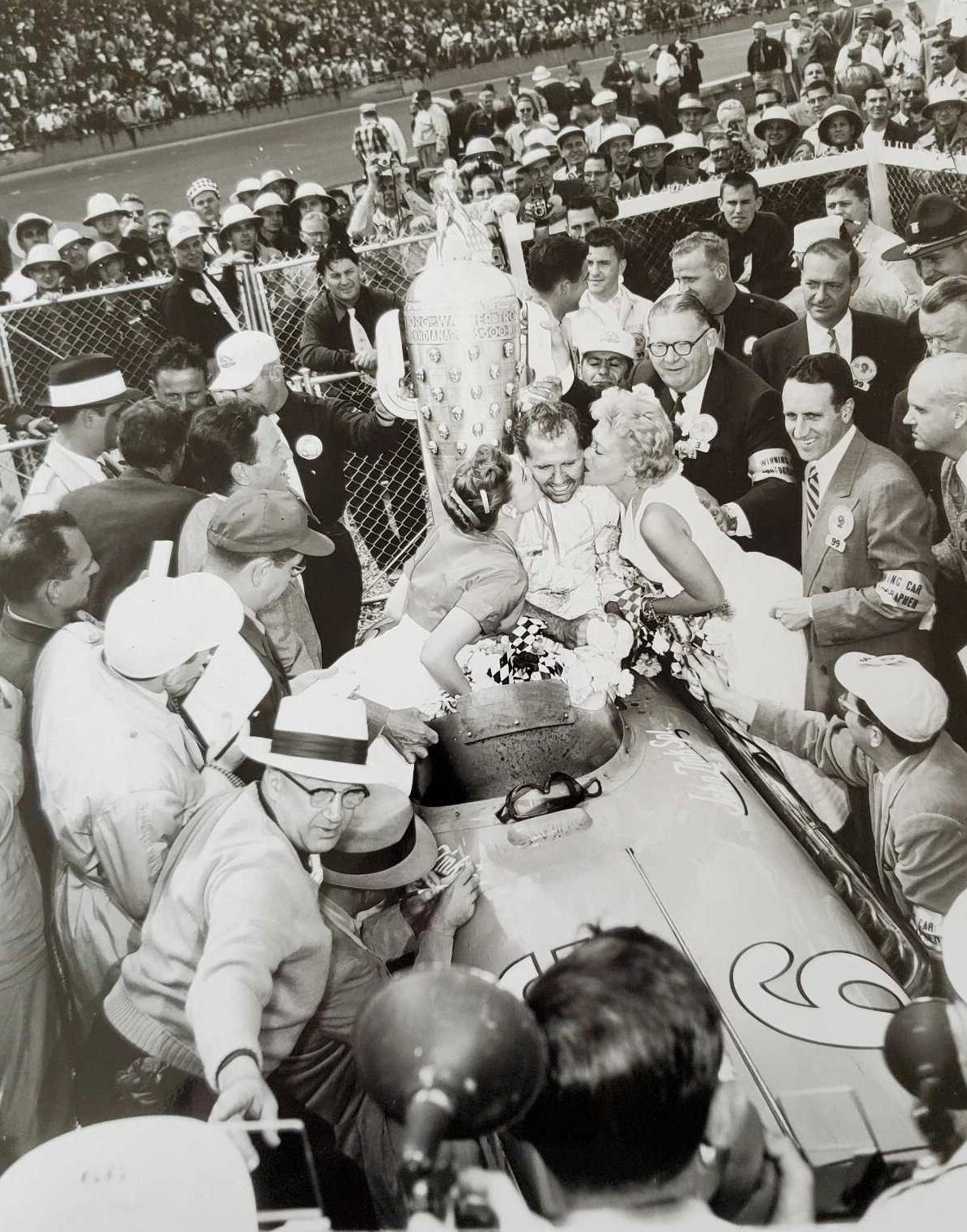
Bob Sweikert drove for John Zink at Indianapolis in 1955 in a Kurtis-Kraft Offenhauser. Sweikert qualified the pink-and-white No. 6 at an average speed of 139.996 mph, good enough for 14th on the starting grid (Jerry Hoyt sat on the pole). A few days before the race, mechanic A. J. Watson had to return to California because of a family emergency, leaving the John Zink Special disassembled in the garage. A note written by Watson was found near the car. It read: "Have the crew put the chassis together. Bob Sweikert build the engine."
Bob Sweikert proceeded to assemble the four-cylinder Offenhauser himself.
In the race, Vukovich was leading on lap 56 when he was killed in an accident. He had won the previous two Indianapolis 500s. Sweikert went on to win the race after leading 86 laps and averaging 128.209 mph. At the victory banquet, A. J. Watson credited Sweikert with completing the final preparation of the winning Offenhauser engine.
Sweikert finished the next three AAA Championship races—Milwaukee, Langhorne, and Springfield—in second place. He was third in the second Milwaukee race, fourth at DuQuoin, and won at Syracuse in September. By season's end, he led Jimmy Bryan in the standings and was declared the AAA National Champion.
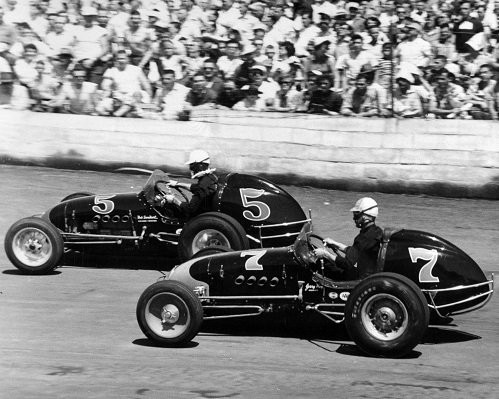
The 1955 Midwest Sprint Car season had opened on April 3 on the Dayton hills. Sweikert ran thirty laps in record time and lapped most of the field, while Hoyt finished second. With the Speedway looming, the pair headed to Salem on May 1, where Bob set another thirty-lap record.
Tragically, on July 11 at Oklahoma City, Jerry Hoyt was killed while running second to Bob in a heat race on a sun-drenched, rut-filled track. Three days later, a solemn Bob Sweikert signed in at Kansas City, Kansas, and won another race—this time for a dear friend.
On August 14, Bob notched a win at Heidelberg, Pennsylvania, and on September 4, DuQuoin was his. That left the finale, Salem's Joe James Memorial, on September 25. Another convincing victory, in record time, over 50 laps. Bob had dethroned friend and rival Pat O'Connor for the AAA Midwestern Sprint Car Championship. He won nine sprint car races in his No. 5 machine, most of them coming on his favorite tracks.
AAA left racing after the 1955 season and USAC started sanctioning the series that next year.
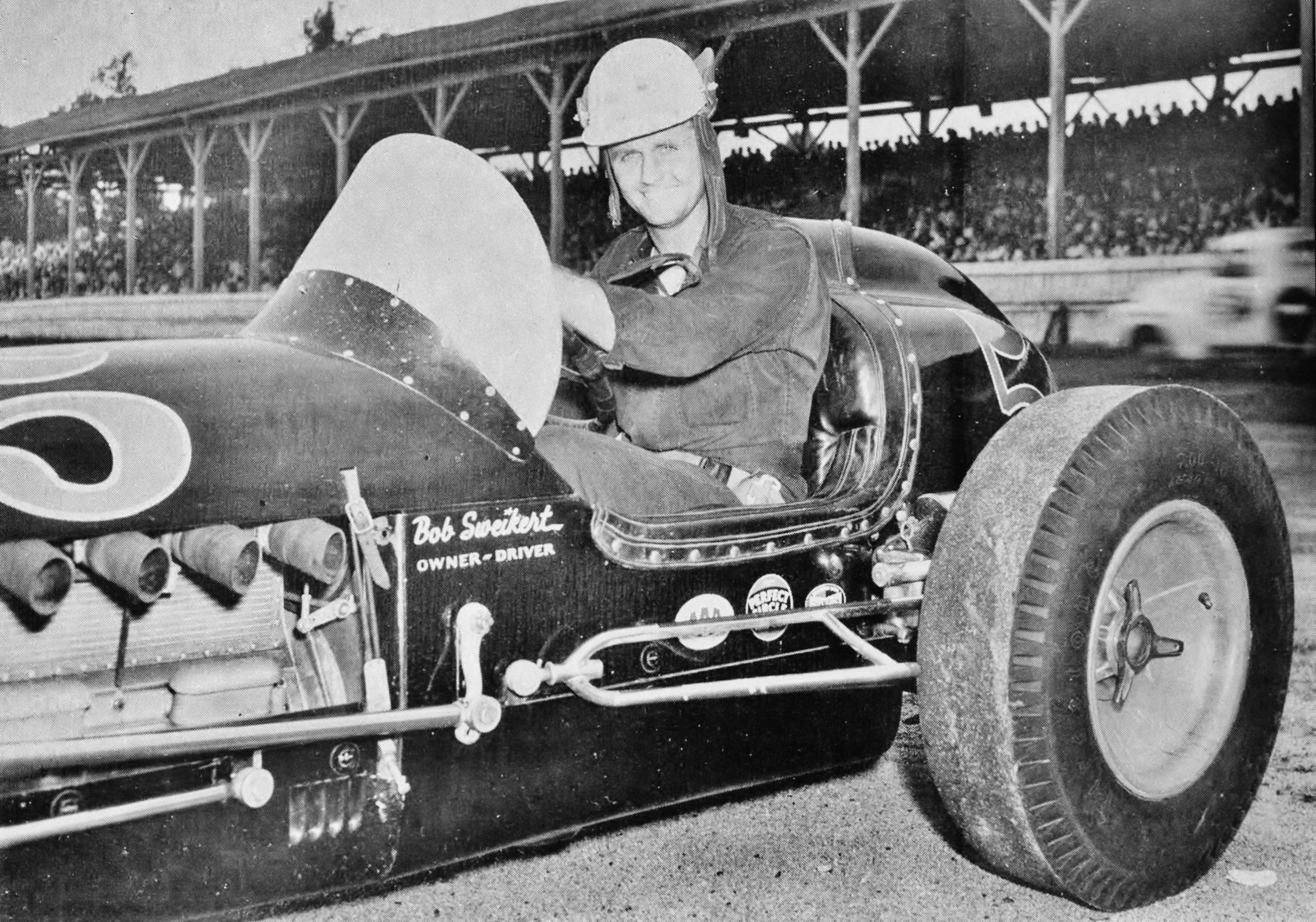
The witty and charming Sweikert rocketed into 1956, racing USAC sprint cars at West Palm Beach, Florida, on February 1 and winning. Following that performance, he finished third in the 12 Hours of Sebring road race in a D-Type Jaguar owned and co-driven by Jack Ensley. On May 6, he won for the final time in a sprint car race at Dayton.
A disagreement with car owner John Zink (Sweikert learned his car owner had taken out a $50,000 life insurance policy on him) saw the defending champion return to Indianapolis in a different car for 1956. Pat Flaherty became the replacement and won in the John Zink Special—now a Watson-Offenhauser—that had originally been intended for Sweikert. Instead, Sweikert drove the No. 1 D-A Lubricant Special, owned by Racing Associates. He ran second for a time before blowing a tire on lap 130, hitting the wall in Turn 2, and ultimately finishing sixth after losing time while riding back to the pits on the rim.
Bob's friends, Johnnie Parsons among them, had nagged him to stop racing the high banks. "Bob, those are dangerous hills," Parsons argued. "I wish you wouldn't drive them. If you go out of the ballpark, you've had it... completely."
Sweikert laughed; the hills had been good to him.
"John, there's money there. And it's easy for me. That's why I'm racing at Salem this Sunday."
That Father's Day afternoon, June 17, 1956, at his favorite track in Salem, Bob's Watson-built sprint car wasn't handling properly.
"I'd load her up if it didn't feel right," O'Connor advised him.
"I'll get it sorted out," Bob smiled. "You just don't want me to be here, Skinny!"
During the feature, Bob tried to retake his position from Ed Elisian, a longtime rival from their days racing hot rods in the Oakland area. Suddenly, Sweikert's yellow D-A Lubricant No. 1 sprint car veered toward the outside crash wall in Turn 1. His car rode the wall for a distance, then flew into the air and out of the track before crashing into the trees. Bob Sweikert was killed. O'Connor sat in his car, wiping tears from his face.
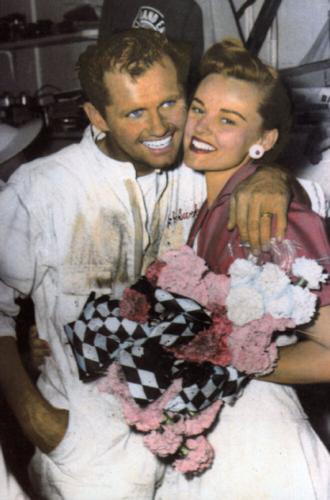
What had motivated Bob Sweikert? According to his wife Dorie, speaking after his $76,139 Indianapolis 500 victory:
"But money isn't what makes him race so much. It's the love that keeps him on the move—keeps him pushing to drive more often. I resigned myself to that a long time ago. I'm a race driver's wife, and I'm behind him all the way. I would never ask him to cut back or slow down. He wouldn't be Bob Sweikert if he did either one."
To this day, Bob Sweikert remains the only driver to ever win the Indianapolis 500, National Championship, and Sprint Car Championship in the same season.